
The logo is the last decision, not the first.
How to Build a Brand Identity From Scratch: The 7-Step Process
The 7 steps to build a brand identity from scratch: research, positioning, messaging, design system, guidelines and rollout, with timelines and real examples.

Quick answer: Building a brand identity from scratch takes seven steps: (1) discovery and research, (2) positioning and brand strategy, (3) naming and messaging, (4) creative direction and moodboards, (5) visual identity design (logo, colour, typography, imagery), (6) brand guidelines, and (7) rollout across every touchpoint. Strategy comes before design: the logo is the last thing you should decide, not the first. For most startups the process takes 4–10 weeks.
By the Life Designer team · Reviewed by Drix, Co-Founder & Head of Marketing · Last updated: October 2026
Most founders start a brand with a logo, because the logo is the visible part. But a logo designed before you know who you're for and why you're different is a guess, and guesses get redesigned.
Here's the step-by-step process we follow at Life Designer for new brands and rebrands, with examples from projects across wellness, renewable energy, education and tourism.
What is the difference between brand strategy and brand identity?
Brand strategy is the thinking: who you serve, what problem you solve, why you're different from the alternatives, and how you want people to feel about you. It's written down as positioning, messaging and personality.
Brand identity is how that strategy shows up: the name, logo, colours, typography, imagery, tone of voice, packaging and website.
A simple way to remember it: strategy decides what you stand for; identity makes it recognisable. Identity without strategy looks nice but says nothing. Strategy without identity is a document nobody sees.
Step 1: Discovery and research
Before any sketching, gather the raw material:
Founder and stakeholder interviews: the vision, the non-negotiables, what the business must never be confused with.
Customer insights: who buys, why they buy, what words they use to describe the problem.
Competitor audit: screenshot every competitor's logo, website and ads on one board. You'll quickly see the colours, styles and claims everyone already uses, and where the white space is.
Channel mapping: where the brand will live first (packaging, Instagram, LinkedIn, app, retail). This changes design priorities.
Step 2: Define positioning and brand strategy
Turn research into a few clear statements:
Positioning statement: For [audience] who [need], [brand] is the [category] that [key benefit], unlike [alternative].
Brand promise: the one thing customers can always expect.
Personality: 3–5 traits (for example "warm, precise, quietly premium").
Proof points: the facts that make the promise believable.
If you can't fill in the positioning statement without arguing with your co-founder, stop here and resolve it. Every design decision downstream depends on it.

Step 3: Naming, tagline and messaging
If you need a name, shortlist options that are easy to say, spell and search, then check domain availability and run a trademark search before falling in love with one. Then write the core messaging: a one-liner, an elevator pitch, key messages per audience, and tone-of-voice dos and don'ts.
Step 4: Creative direction and moodboards
Translate the strategy into 2–3 distinct visual directions using moodboards: references for colour, type, imagery, texture and layout. Pick one direction with stakeholders before designing the logo. This single step saves more revision rounds than anything else in the process.

Step 5: Design the visual identity system
Now design, as a system rather than a single logo:
Logo suite: primary logo, secondary/stacked version, icon or monogram, and versions for dark and light backgrounds.
Colour palette: primary and secondary colours with HEX, RGB and CMYK values, and accessible contrast for digital use.
Typography: a heading and body pairing, with web-safe licences.
Graphic elements: patterns, icons, shapes, illustration style.
Imagery style: how photos and product shots should look.
Test every element at real size: a favicon, an Instagram profile picture, a product label, a billboard.
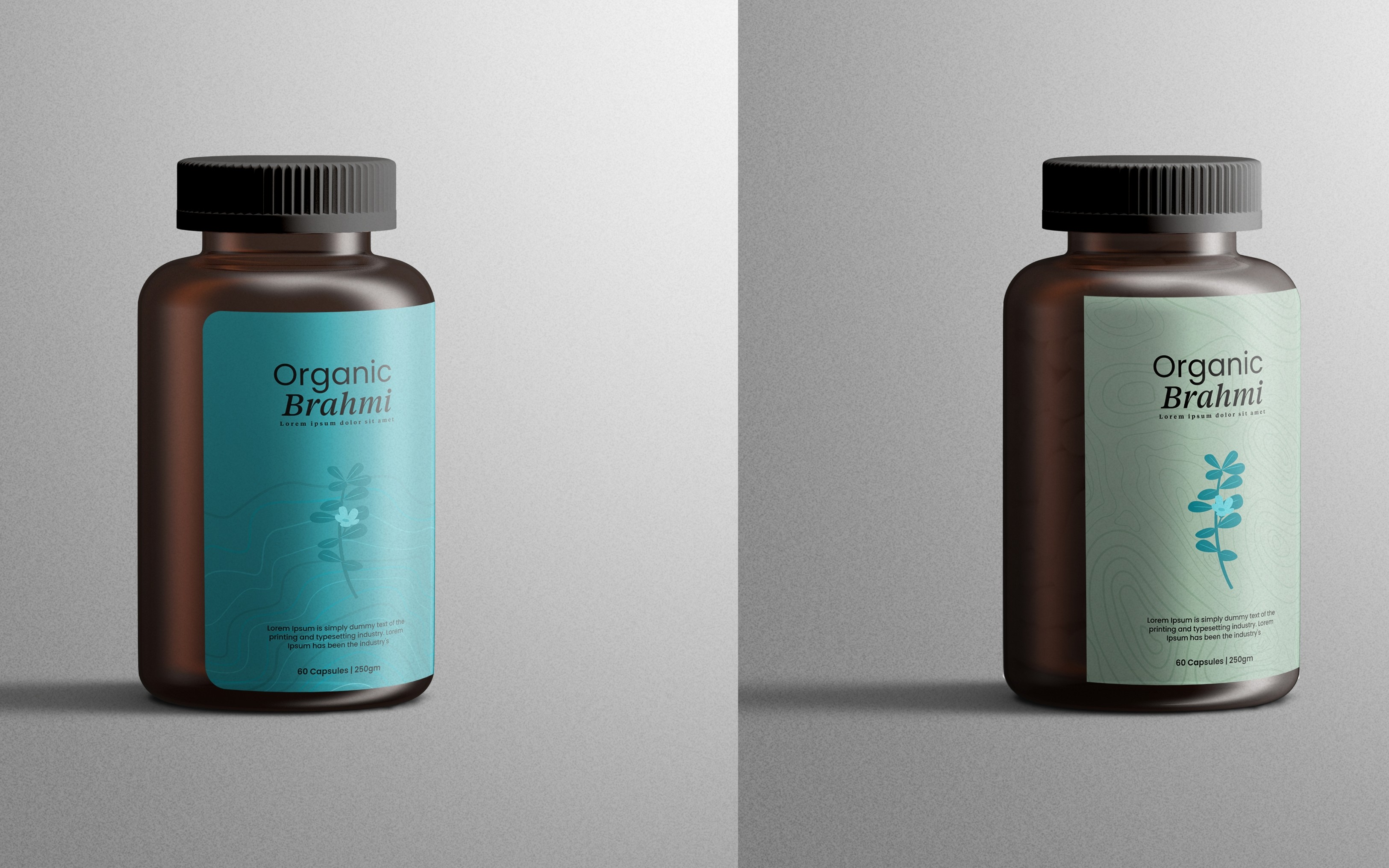
Example: for Vedic Roots, an ayurvedic wellness brand, the identity work spanned a logo redesign, brand strategy, guidelines and packaging. Because packaging was in the same brief, the identity was designed to work on the bottle from day one, not adapted to it later.
Step 6: Create brand guidelines
Brand guidelines (a brand book or guidebook) keep the identity consistent when other people use it: your team, printers, freelancers and future agencies. A useful guidebook covers:
strategy summary and personality;
logo usage, clear space, minimum sizes and misuse examples;
colour and typography rules;
tone of voice with before/after copy examples;
templates for social posts, presentations and documents.

Example: Little Ville, a preschool chain, needed its existing logo refined and a brand guidebook so every centre and every piece of collateral looked like the same brand.
Step 7: Roll out the brand across touchpoints
A brand only becomes real when customers see it consistently. Prioritise rollout by where customers meet you first:
website and landing pages;
social media profiles and post templates;
packaging and labels;
signage, stationery and pitch decks;
ads and sales collateral.

Example: Sunzar, a B2B solar marketplace, went from brand strategy and identity to a brand guidebook, collaterals and then a responsive web app, so the product experience matched the brand. Namma Bengaluru Aquarium needed the identity rolled out into physical signage and a social media strategy for a public attraction.
How long does building a brand identity take?
Lean identity (logo suite, colours, type, mini guidelines): 2–4 weeks.
Full identity with strategy and guidebook: 4–10 weeks.
Rebrand with packaging across many SKUs or locations: 8–16 weeks or more.
Most delays come from unclear decision-makers, not design time. Agree who signs off at each stage before you start.
Common mistakes to avoid
Starting with the logo. Without positioning, feedback becomes "I like blue" vs "I like green".
Designing by committee. Collect input widely, decide narrowly.
Copying the category leader. Looking like the biggest competitor makes you look like a cheaper version of them.
Skipping guidelines. Without them the brand drifts within months.
Forgetting digital use. Thin lines and subtle gradients that look great on a poster often fail as a 32-pixel app icon.
Frequently asked questions
What are the elements of a brand identity?
The core elements are the name, logo suite, colour palette, typography, imagery style, graphic elements, and tone of voice, documented in brand guidelines.
Can I build a brand identity myself?
You can do the strategy groundwork yourself using the steps above, and many founders should. The design system, guidelines and rollout are where professional designers usually save time and redesign costs later.
How much does a brand identity cost in India?
Comprehensive branding packages in India are commonly quoted between ₹1 lakh and ₹10 lakh depending on depth and deliverables. Life Designer's brand identity projects start at ₹3 lakh and scale with strategy depth, number of touchpoints and packaging SKUs. See our guide to brand identity and website package costs for a full breakdown.
When should a startup invest in branding?
Before you spend serious money on ads, a website or packaging. Those assets are built on top of the brand, and redoing them after a rebrand costs more than doing the brand first.
How do I know if my brand identity is working?
Look for recognition (people remember and describe you correctly), consistency (every touchpoint looks like the same company) and commercial signals such as better ad engagement, higher-quality enquiries and easier sales conversations.
The bottom line
A strong brand identity isn't a logo. It's a system built on a clear strategy and applied consistently everywhere your customer meets you. Do the thinking first, design as a system, document it, then roll it out.
Building a new brand or planning a rebrand? Explore our branding services or book a free strategy call with the Life Designer team in Bengaluru.