What a startup app really costs, line by line, before you sign a quote.
Custom Web & Mobile App Development Cost in India (2026)
Custom web and mobile app development cost in India for startups in 2026: ₹20–80 lakh agency ranges, what drives price, timelines and ongoing costs.

Quick answer: A custom web and mobile app for a startup in India typically costs ₹20–80 lakh with a full-service agency when product UI/UX design, a web app, Android and iOS apps, a backend and admin panel are all included. Where you land depends on the number of user roles, integrations (payments, maps, KYC), AI features and how many platforms ship on day one. A marketing website alone is far cheaper, at ₹3–10 lakh. Plan an extra 15–25% a year for hosting, maintenance and new features.
By the Life Designer team · Reviewed by Drix, Co-Founder & Head of Marketing · Last updated: October 2026
Ask five development shops what your app will cost and you'll hear five numbers, some of them ten times apart. That's rarely because someone is being dishonest. It's because "an app" can mean a three-screen booking tool or a two-sided marketplace with payments, dashboards, notifications and an admin team behind it.
This guide breaks the cost down the way we do when we scope a product: by what you're building, who's building it, and what it takes to keep it running after launch. We'll share our own pricing too, so you have at least one fixed reference point.
How much does it cost to build a custom app in India in 2026?
At Life Designer, product UI/UX design plus app development runs ₹20–80 lakh, depending on complexity and AI integration, with GST extra. Here's roughly how that range maps to scope. Treat these as indicative bands, because every proposal we send is line-item and written after a discovery call.
Product type | What it usually includes | Indicative budget | Typical timeline |
|---|---|---|---|
Focused MVP | One user role, 10–20 screens, web app or one mobile platform, basic admin, one payment or booking flow | ₹20–30 lakh | 8–12 weeks |
Multi-role product | Customer and partner apps, web dashboard, Android + iOS, integrations (payments, maps, SMS, KYC), reporting | ₹30–50 lakh | 12–20 weeks |
Platform or marketplace | Several user types, complex workflows, design system, AI features, analytics, role-based admin, scale planning | ₹50–80 lakh | 5–8 months |
If you only need a marketing website or a simple content site, that's a different job. Our website design and development work runs ₹3–10 lakh, and many startups launch the site first while the product is still being built. Our guide on custom vs no-code websites covers that decision.
What actually drives the cost of a web and mobile app?
Screens are a poor way to estimate an app. Logic is a better one. These are the factors that move a quote most:
1. Number of user roles
Every role (customer, vendor, field agent, admin, finance) has its own permissions, flows and edge cases. A product with three roles is close to three products sharing one backend.
2. Platforms on day one
A web app plus native-feeling Android and iOS apps costs more than starting on one. Cross-platform frameworks reduce duplication, but you still design, test and release for each store.
3. Integrations
Payment gateways, maps, SMS and WhatsApp, e-sign, KYC, accounting tools and government portals each add build time, testing and failure handling. Third-party APIs are the most common source of timeline slips.
4. AI features
Search, recommendations, document reading, chat assistants or automated workflows push a project towards the upper end of the range, because they need data preparation, prompt and model testing, guardrails and ongoing usage costs.
5. Design depth
A product built from a proper UX process and design system costs more upfront but much less to extend. A product designed screen by screen gets expensive the first time you add a feature.
6. Admin and operations
Founders often forget that someone has to approve vendors, issue refunds, edit content and pull reports. A good admin panel can be a quarter of the build.

Where does an app development budget go?
For a typical agency-built product, this is a reasonable way to think about the split:
Phase | Share of budget | What you get |
|---|---|---|
Discovery and product strategy | 5–10% | User and stakeholder interviews, feature prioritisation, user flows, technical architecture |
UX and UI design | 15–25% | Wireframes, clickable prototype, visual design, design system in Figma |
Frontend and mobile development | 25–35% | Web app, Android and iOS apps built to the designs |
Backend, APIs and admin | 20–30% | Database, business logic, integrations, admin panel, permissions |
QA, launch and handover | 10–15% | Testing across devices, store submission, documentation, training |
If a quote has no visible line for discovery or QA, ask where that work is hiding. It usually isn't hiding; it's missing.
What does this look like on real projects?
Three of our builds show how scope shapes cost and time:
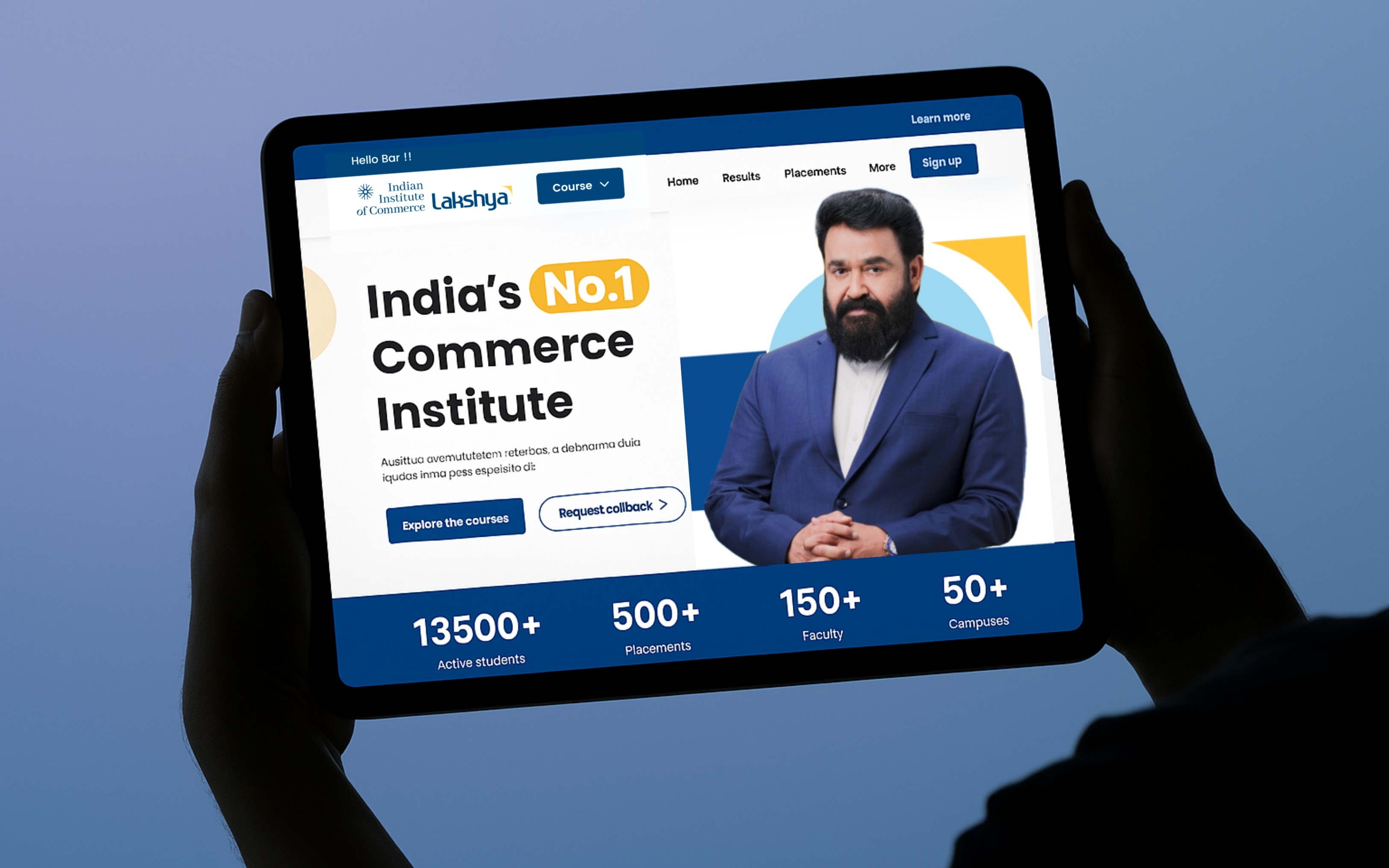
Lakshya (Indian Institute of Commerce Lakshya): a MERN web app covering course discovery, enrolment, bookings, payments, student dashboards and an admin CRM. Delivered in 8 weeks, and the client reported 80% more bookings without calls.
Rengy Partner: Android and iOS apps for solar vendors handling onboarding, financing, procurement, installation tracking and subsidy applications. Designed in Figma and built on MERN in 12 weeks, it has been live for 6+ months with 100+ solar vendors onboarded, 1,000+ installations and projects managed, and 100+ subsidy applications processed.
HYOU Fine Jewelry: a US D2C jewellery brand where we handled UX strategy, UI, a design system, and a web plus mobile app on MERN, first as an initial build and later as a redesign.
The pattern: a single-platform product with clear flows (Lakshya) ships fast. A multi-step operational app on two stores (Rengy) takes longer. A brand-led commerce product (HYOU) needs more design investment because the experience is the product.
Should you hire freelancers, a dev shop or a full-service agency?
Option | Strengths | Watch-outs | Best for |
|---|---|---|---|
Freelancers | Lower day rates, flexible | You manage design, backend, QA and handovers yourself; continuity risk if one person leaves | Prototypes, internal tools, founders with a technical co-founder |
Development-only shop | Engineering capacity, often fast to start | Design and product thinking may be thin; you supply specs | Teams that already have finished designs and a product manager |
Full-service agency | Strategy, UX, UI, development and launch under one team and one timeline | Higher upfront cost; check they've shipped both design and code | Funded startups that need a product built properly the first time |
We've written a longer comparison on full-service agencies vs freelancers if you're weighing that choice.
What ongoing costs come after launch?
The build is only part of the bill. Budget for these from day one:
App store accounts: Apple's Developer Program costs US$99 per membership year, and Google Play charges a one-time US$25 registration fee.
Cloud hosting and databases: small at launch, growing with users, storage and traffic.
Third-party services: SMS, email, maps, payment gateway fees and any AI model usage, usually billed per use.
Maintenance: OS updates, security patches, library upgrades and bug fixes. We suggest founders plan for roughly 15–25% of the build cost a year, including small feature work.
Marketing: an app nobody installs doesn't earn back its cost. Our performance marketing and social media retainers each start at ₹80,000 a month, with ad budgets extra.
How can you reduce app development cost without cutting quality?
Ship one platform first if your users allow it. A web app or a single store often proves the model before you fund the second.
Cut features, not process. Removing three features saves more than skipping discovery or testing, and it's safer.
Design the system once. A design system makes every future screen cheaper to build.
Use off-the-shelf where it isn't your edge. Payments, authentication and notifications rarely need to be custom.
Phase the admin panel. Start with the operations you do daily; automate the rest later.
Fix the scope before the build starts. Mid-build changes are the most expensive line in any project.
What should an app development proposal include?
Before you compare numbers, make sure each proposal answers the same questions:
A feature list split by user role and platform.
The tech stack, and who owns the code, cloud accounts and store listings.
Design deliverables: prototype, design system, handover files.
Milestones tied to payments, with a demo at each one.
What testing covers (devices, OS versions, load) and the warranty period after launch.
The cost of a change request and how it's approved.
Our web and mobile app design team in Bengaluru follows a Discover → Define → Design → Deploy process, and every proposal is written in this line-item format.
Frequently asked questions
How much does an MVP app cost in India?
A focused MVP with one main user role, a basic admin panel and a single platform usually sits at the lower end of an agency range. At Life Designer that means around ₹20–30 lakh including product UI/UX design, depending on integrations. Freelancer-built MVPs can cost less, but you take on project management, QA and continuity yourself.
How long does it take to build a web and mobile app?
A focused MVP often takes 8–12 weeks; a multi-role product with Android, iOS and a web dashboard usually takes 12–20 weeks; complex platforms can run 5–8 months. For reference, we delivered the Lakshya web app in 8 weeks and the Rengy Partner Android and iOS apps in 12 weeks.
Is it cheaper to build a web app or a mobile app first?
A web app is usually cheaper and faster to launch, since there's no store review and one codebase serves every device. Choose mobile first if your users need offline access, the camera, GPS or push notifications as part of the core experience, as field and vendor apps often do.
Does adding AI make an app much more expensive?
It depends on the feature. Using an existing AI model for search or summaries adds moderate cost. Custom workflows, document processing or assistants that act on your data need more testing and guardrails, and they bring ongoing usage fees. AI-heavy products tend to sit at the upper end of our ₹20–80 lakh range.
Who should own the source code after the project?
You should. Your contract should state that the code, designs, cloud accounts, domains and app store listings belong to your company, and that the agency hands over repositories and credentials at launch. Ask for this in writing before you sign.
Is GST included in app development quotes?
Usually not. Most Indian agencies, including Life Designer, quote exclusive of 18% GST. Check this before comparing proposals side by side, and confirm which third-party costs (app store fees, cloud hosting, SMS or payment gateway charges, AI usage) are excluded, since these are normally billed to you directly by the provider.
The bottom line
A custom web and mobile app for an Indian startup usually lands between ₹20 lakh and ₹80 lakh with a full-service team, and the spread is explained by user roles, platforms, integrations and AI. Scope tightly, ship one strong version, and keep a yearly budget for maintenance and growth.
If you'd like a line-item estimate for your product, book a discovery call with Life Designer. We'll tell you what to build first and what can wait.
Sources: Apple Developer – Choosing a membership · Google Play Console Help – Get started with Play Console